
1. Executive Summary
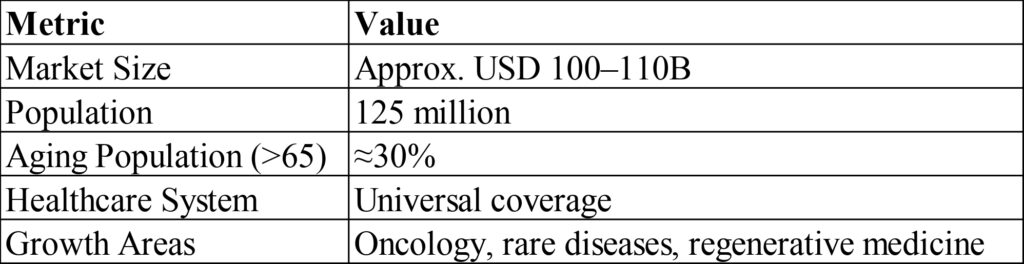
Japan represents one of the most attractive yet complex pharmaceutical markets globally. As the third-largest pharmaceutical market, it offers strong reimbursement systems, a well-structured healthcare infrastructure, and significant demand driven by an aging population.
However, successful market entry requires a deep understanding of Japan-specific regulatory, clinical, and commercial dynamics. Many overseas companies underestimate these differences, leading to delays, pricing disadvantages, or failed launches.
This whitepaper outlines a practical framework for entering the Japanese market, focusing on the Japanese market analysis, regulatory strategy, and partner selection.
2. Why Japan Matters
- 3rd largest pharmaceutical market globally
- Highly organized universal healthcare system
- Government-controlled reimbursement system
- High unmet need for aging-related diseases
- Strong governmental support for rare diseases and pediatric care
3. Japan Entry Flow Chart
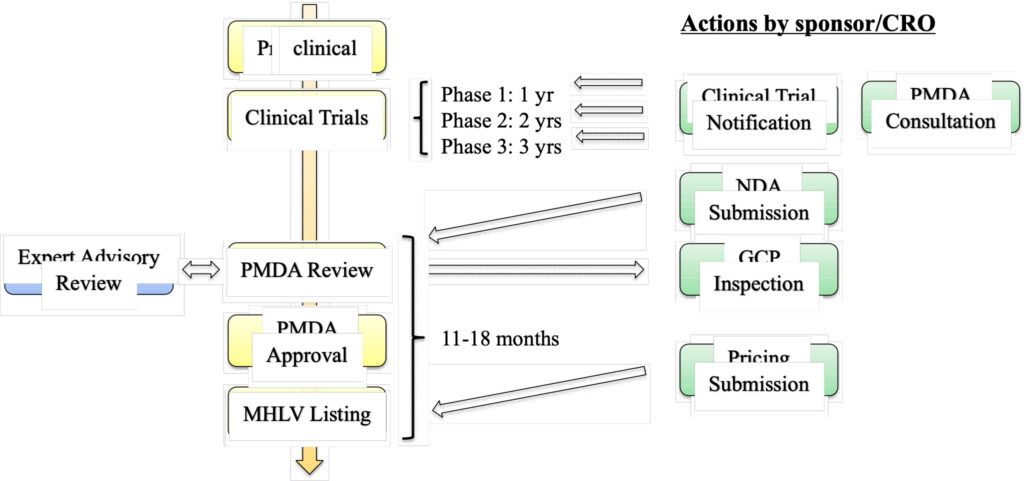
Shown below is a typical case of Japan entry flow. A sponsor without a Japanese entity usually outsources the interactive activities with PMDA and MHLV to a CRO in Japan. It is important to note, however, that the sponsor is expected to have a clear idea about the study design from the start.
4. Key Challenges for Overseas Companies
1. Limited KOL access
Building relationships with key opinion leaders (KOLs) in Japan is often difficult for overseas companies due to language, cultural, and network barriers. Early engagement with trusted experts is critical for clinical development and market adoption.
2. Complex regulatory environment (PMDA, JPMA)
Japan has a unique regulatory framework involving the PMDA and pharmaceutical industry-specific practices. Companies must carefully align development strategies, timing of PMDA consultation, and submission planning with local expectations.
3. Local clinical data requirements
Japanese regulators may require local clinical data or ethnic sensitivity assessments to support approval. Insufficient understanding of these requirements can lead to development delays and additional costs.
4. Partner identification challenges
Finding the right CRO, pharmaceutical partner, or commercialization partner in Japan can be challenging without local knowledge and networks. The quality of local partnerships often determines the success of market entry.
5. Three Pillars of Japan Market Entry
- Japan Market Analysis
Market size estimation
Drug pricing
KOL mapping
Guidelines and standard of care
Competitor analysis - Clinical Development Strategy
PMDA alignment
Clinical trial design
Site identification
Real World Evidence (RWE) - Partner Search
CRO network
Pharma partners
6. Japan Entry Models
Example:
A European biotech developing a rare disease therapy initially planned a direct Japan launch.
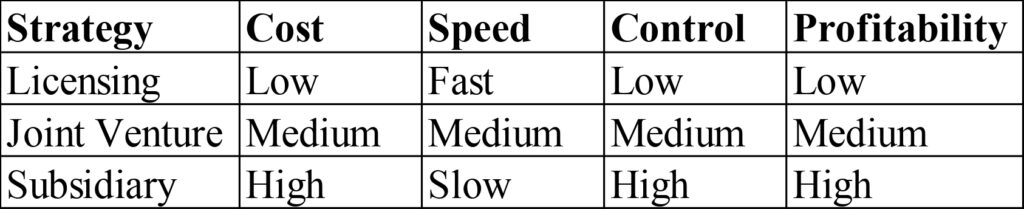
However, after Japan market assessment through (international and domestic) literature search and KOL interviews, the company shifted to a partnership-first strategy, reducing projected entry cost and shortening the expected timeline.
7. Recommended Entry Model: Lean Entry Model
- No initial local entity
- Use CRO and consultant network
- Focus on early validation and partnerships
- Choose one of the three options above after the entry
8. Role of Medical Scientific Consulting
- Japan feasibility assessment
- Regulatory advisory
- KOL engagement plan
- RWE strategy
- Partner identification support
9. Conclusion
Japan requires a tailored strategy. Pricing, evidence, and relationships determine success.
10. Contact
For further discussion on Japan market entry strategy, please schedule a consultation with MSC.